 Verna Prescott
Seven people, one ham bone
Grandmother Opal could make a small piece of salt pork speak through a whole pan of beans. She turned chicken backs into broth, broth into rice, and rice into a meal for seven people.
For anyone feeding a family, or just themselves, on a tight budget
I'm Verna. I learned to cook in an eastern Ohio farm kitchen from my grandmother Opal, who had already cooked her way through the Depression and fed seven people on what a dollar could buy. Here's what she knew. Watch this first:
An empty skillet tells the truth
When I mean to make supper from nearly nothing, I set a skillet on the stove. It doesn't care what I meant to buy or what recipe I saw. It asks: what is here?
Suppose the answer is half an onion, two cups of cooked rice, one egg, a spoonful of bacon grease and salt. That isn't an impressive list. It is supper, though, if you know what order to put it in. Two minutes makes an onion hot. Seven minutes makes it sweet.
Opal cooked that way every day. Nobody called it stretching food. It was simply cooking:
The work is done once. The meals change around it. That's what this handbook teaches.
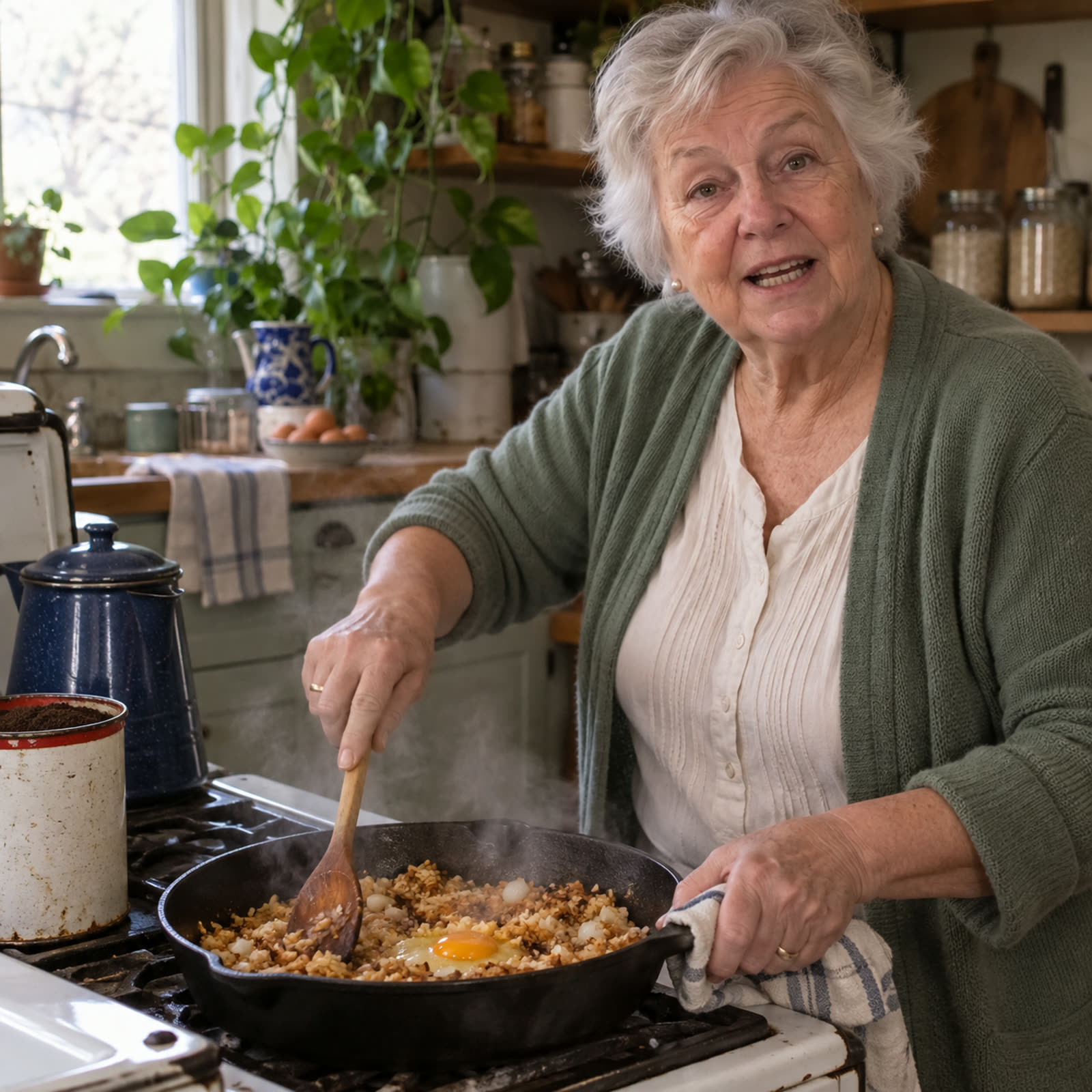
Half an onion, cooked rice, one egg and a spoonful of bacon grease. Supper.
Opal's way
Food stretched with rice, meal, flour or beans needs enough salt and enough browning. Otherwise people blame the cheap ingredient, when the real trouble was timid cooking.
| At supper time | The modern habit | What Opal did instead |
|---|---|---|
| Meat | A big piece in the middle of every plate | Meat as seasoning: a little salt pork speaks through a whole pan of beans |
| Cooking | A brand-new supper every single night | One pot, three suppers. Cook once and let the meals change around it |
| Old bread | Into the bin when it goes dry | Day-old bread has structure. It carries gravy, custard and dressing |
| Bean broth | Poured down the sink | Kept, because it's flavor and body for the next pot |
| Supper for one | Three bites over the sink | A proper plate, a napkin and a chair. Thirty seconds, and you've had supper |
| Leftovers | Pushed to the back of the fridge | Keep one portion, change one, freeze the rest, labeled within two hours |
From the book. The recipes and methods are Opal's, written down with measurements.
What's inside · 8 chapters · 159 pages
Recipes, methods and illustrated guides, written the way Opal taught them: plainly, with the reasons behind each step.
The six pantry foundations, browning and salt, and making a real supper from a nearly empty cupboard.
Beans, broth and grains cooked once and eaten three different ways. Three containers, no waste.
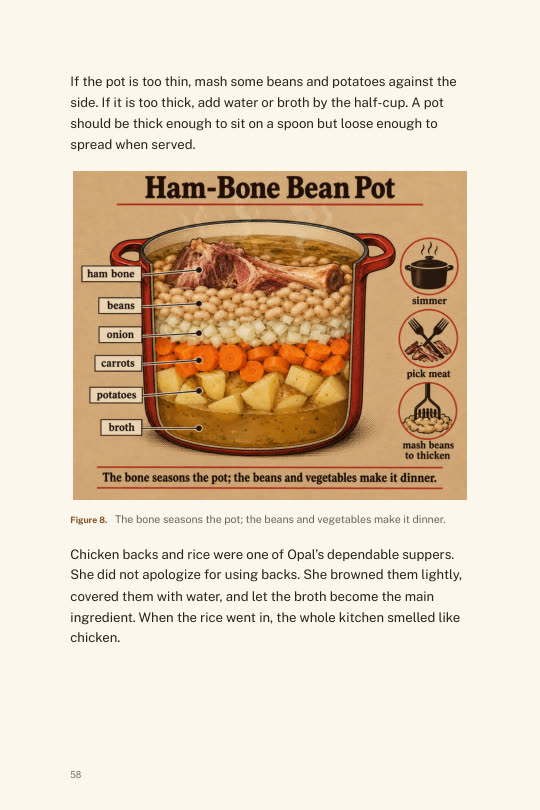
Ham bones, chicken backs, a half-pound of ground beef. Beef and onion gravy, liver and onions, ham-bone bean pot.
Cornbread, dumplings, fried hominy and day-old bread. The cheapest comfort, and why the brown edge matters.
Quick, cheap and complete enough to count. One person is still somebody worth feeding.
Garden, market and tin. August tomatoes, January cans, and when frozen peas make more sense.
The second supper starts before the first reaches the table. Leftovers with a plan.
Cool it, mark it, use it. A household rhythm, and recipes that earn their place on an ordinary Wednesday.
Who it's for
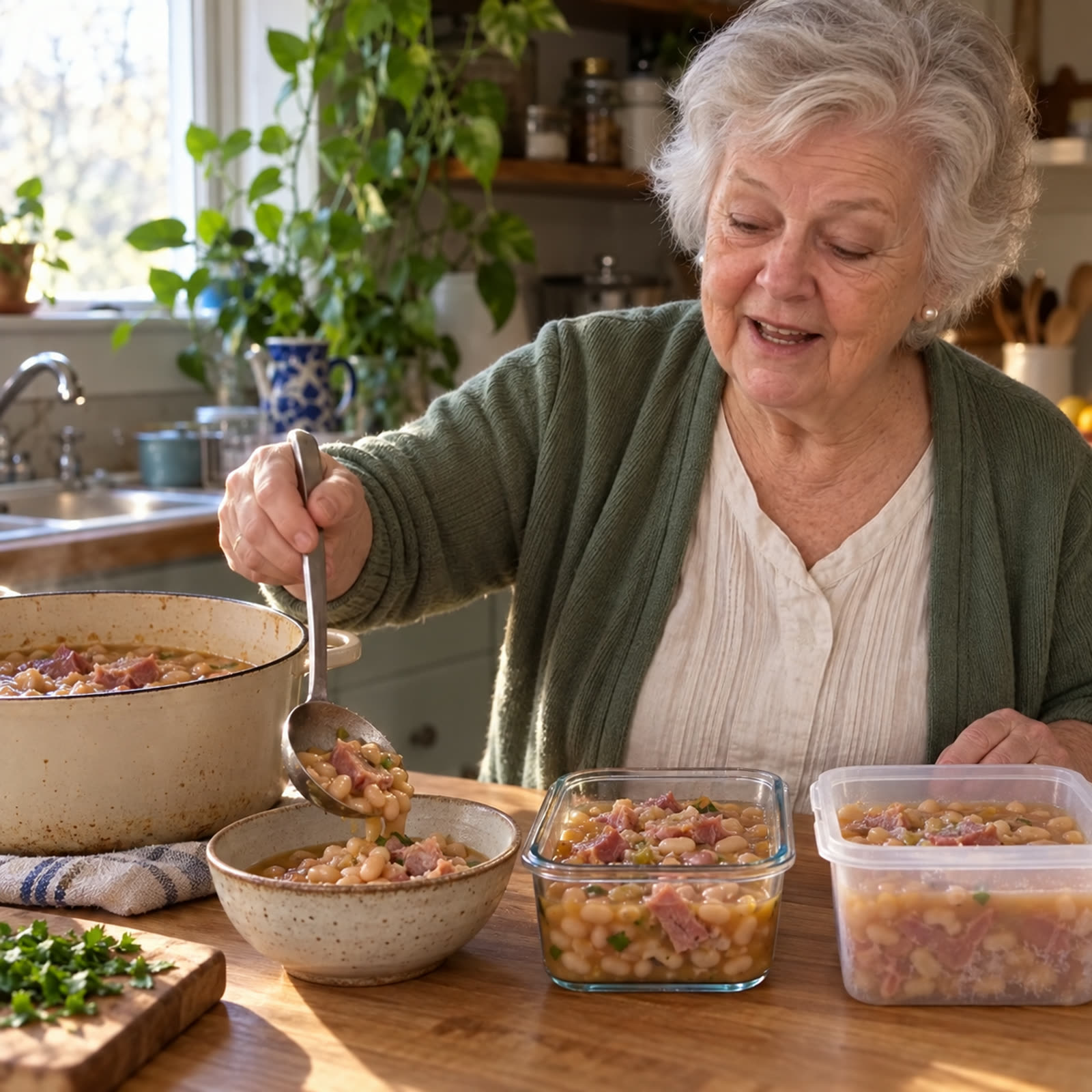
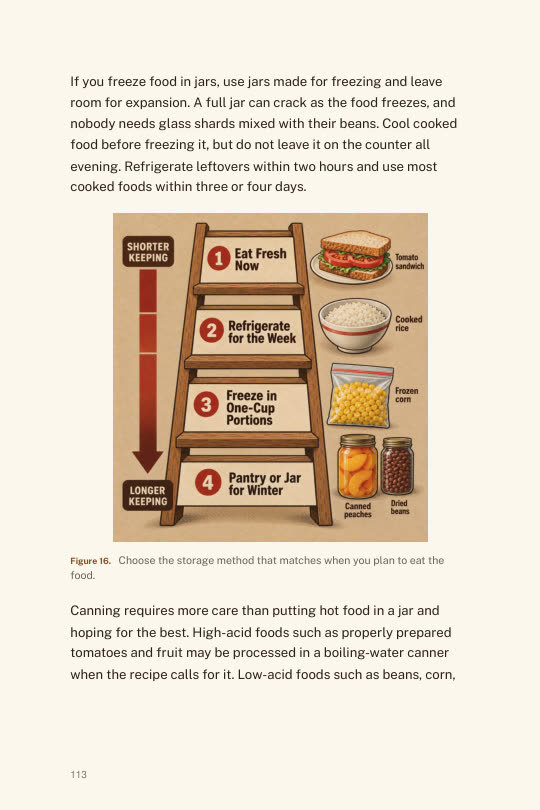
Three containers: tonight, the fridge, the freezer. Good intentions have a short shelf life.
From Opal's kitchen
The book is full of small stories from two kitchens, Opal's and mine. A few of them:
Grandmother Opal could make a small piece of salt pork speak through a whole pan of beans. She turned chicken backs into broth, broth into rice, and rice into a meal for seven people.
In my twenties, in the 1970s, I cooked straight from magazines. Many of those recipes were old stretch suppers wearing fancier names. Years later I understood that Opal had already given me the useful versions.
I once made chicken and rice for myself with a single large chicken wing, a cup of rice and a handful of carrots. I ate it from a proper bowl at the table, not over the sink.
When I put beans on the stove, I set out three containers: one for tonight, one for the refrigerator, one for the freezer. A pot that feeds tomorrow is a beginning, not a sentence.
Look inside
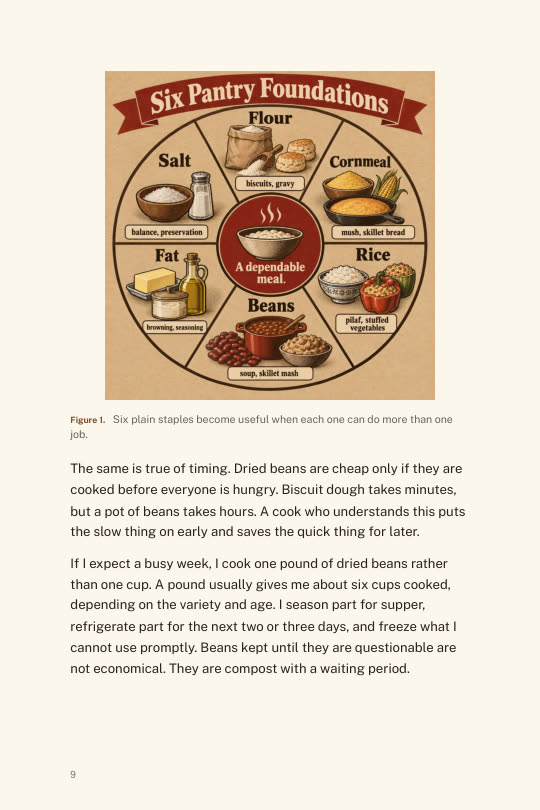
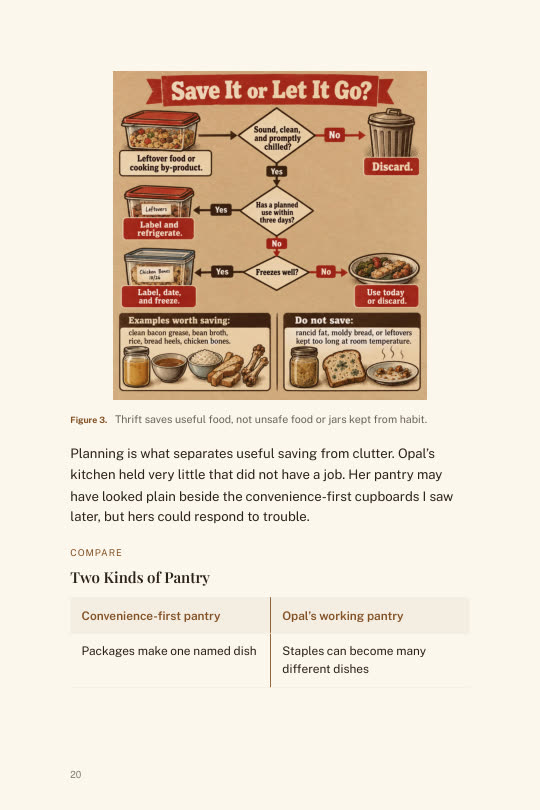
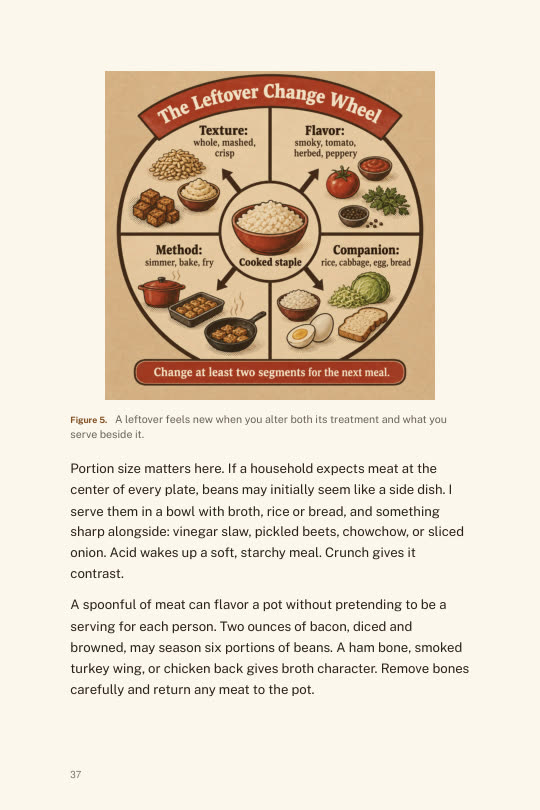
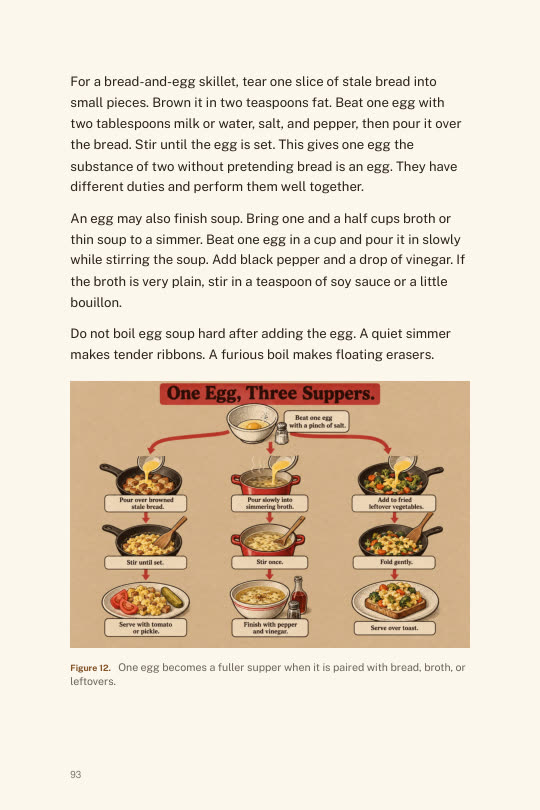
Hand-drawn guides you can prop against the flour tin while you cook.
About the author
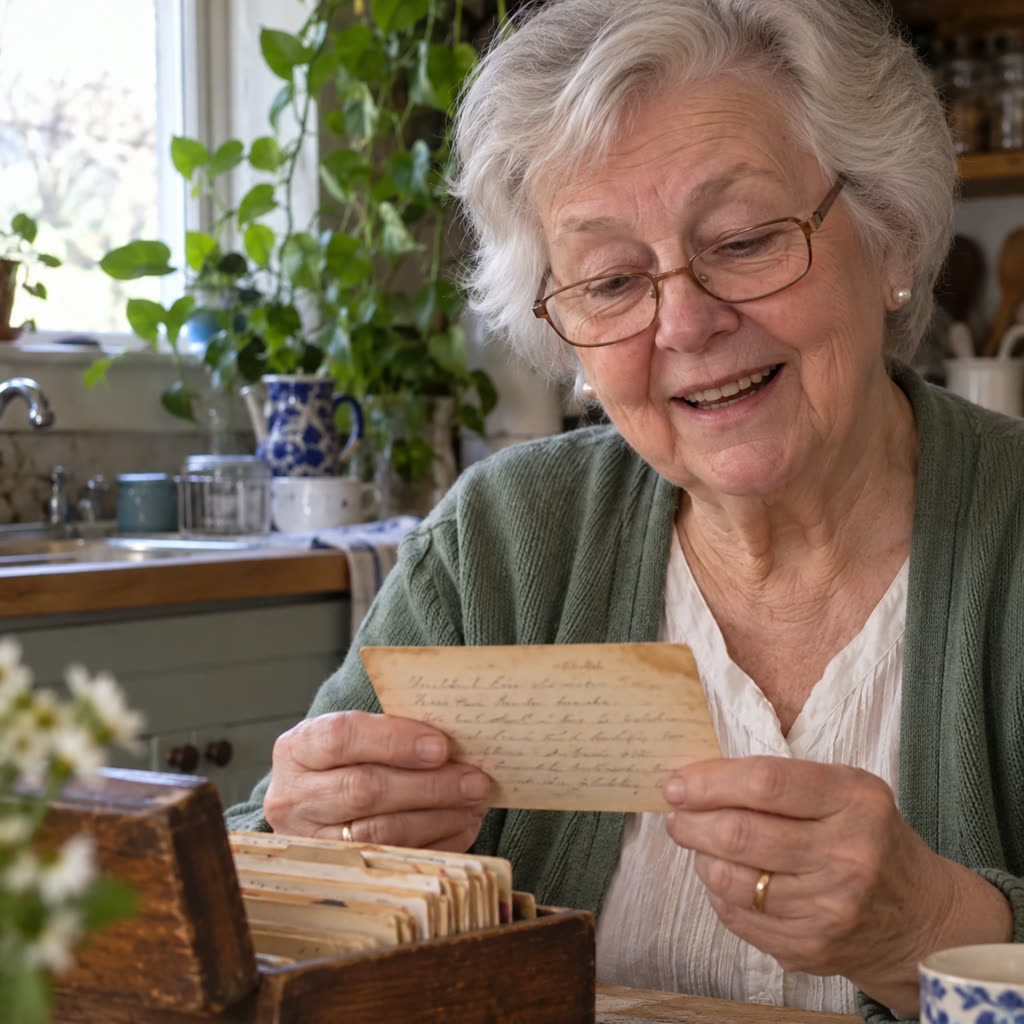
I grew up in a farm kitchen in eastern Ohio. My grandmother Opal had already cooked her way through the Depression. She kept a handwritten recipe box and knew how to make a meal from beans, rice, bread, garden produce and the bits other people overlooked.
I've never cooked in a restaurant or written a formal cookbook. I publish one recipe video each week and read every comment. People kept asking for Opal's recipes with real measurements, so I wrote them down, along with everything she taught me about why they work.
I still keep a coffee tin of bacon grease beside my stove. And I still believe cooking for one deserves a proper plate.
Get the handbook today
Learn to make good suppers out of what's already in the pantry, and keep doing it for years. $21, once.
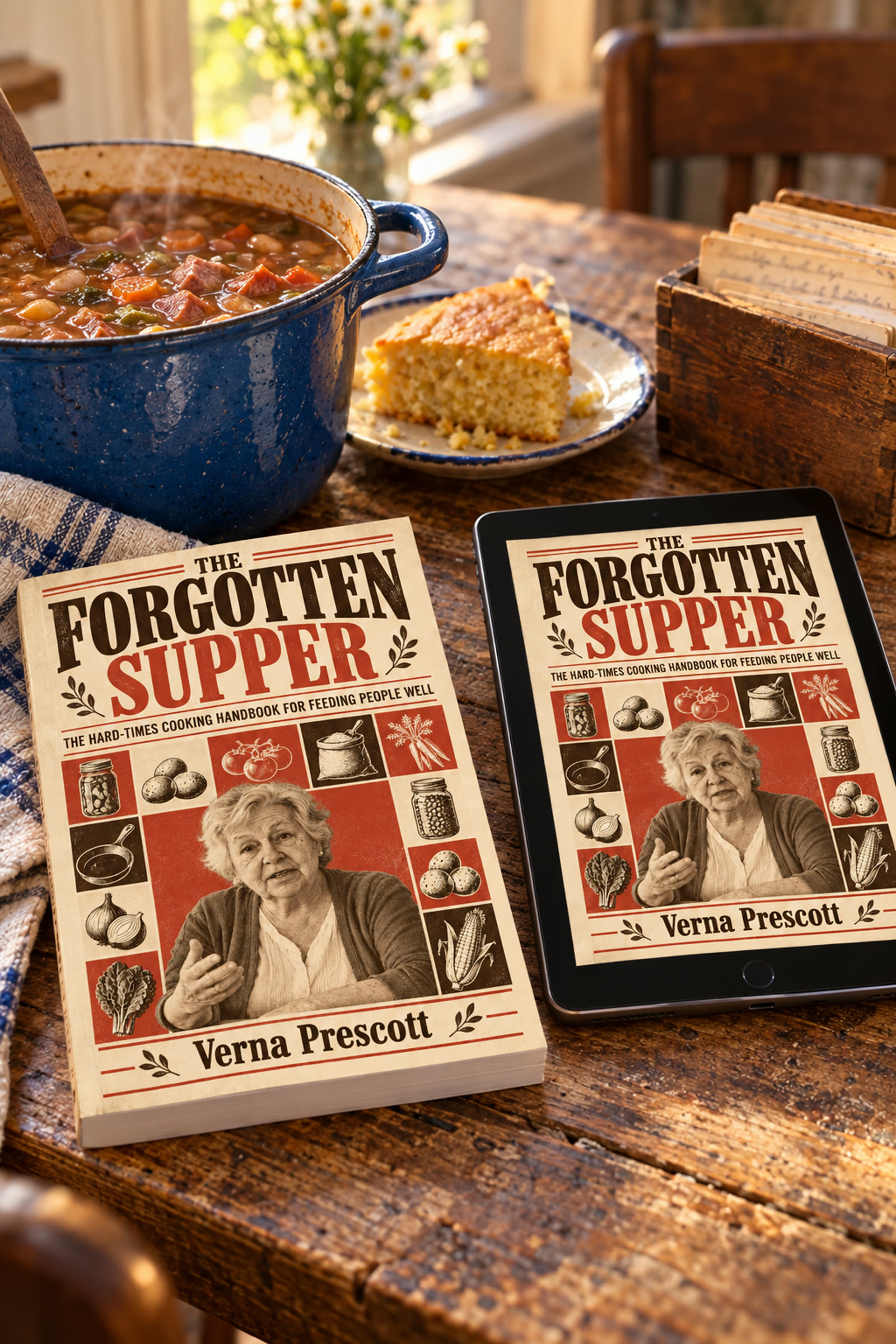
The Hard-Times Cooking Handbook for Feeding People Well
Email us within 30 days of purchase and you'll get a full refund. No forms and no hard questions.
Questions
No. It's a digital PDF (159 pages), so there's nothing to ship and you can start cooking from it within a minute of paying. You can print the pages you use most and keep them in the kitchen.
Right after payment you're taken to the download page, and we also email you a link at the address you used at checkout. If the email doesn't arrive, check your spam folder, or write to contact@vintage-dinner.shop.
It's a handbook with recipes in it. Alongside dishes like ham-bone beans, beef and onion gravy, chicken and rice and cornbread, it teaches the thinking behind them, so you can make supper from whatever you have on hand.
No. A skillet, a pot and the plain things most kitchens have: beans, rice, flour, cornmeal, potatoes, onions, eggs, a little meat and some fat for browning.
No. You pay $21 once. There are no recurring charges.
The price is $21 USD. Buyers in the EU, UK and a few other countries are charged VAT at their local rate on top, and it is shown in the checkout before you pay. US buyers pay $21.
Email contact@vintage-dinner.shop within 30 days of purchase and you'll get a full refund. See the refund policy.
Yes. Payments are processed by Whop, a PCI-compliant payment platform. We never see or store your card details.